What If It’s a Love Story? Liz Kimball on Zeva Bellel's On Becoming
Episode summary:
In this conversation with Zeva Bellel on her podcast On Becoming, we talked about the difference between creative output and creative intimacy, why goals become cages instead of containers, and why the time women need in order to fully express themselves always looks like too much. Most of us were trained to treat our creativity as an output problem, something to be managed, measured, and optimized. The alternative is to treat it as a living relationship, one that responds to attention rather than pressure. Listen for practical tools for building a creative practice that feels alive instead of performative.
What we talked about
The difference between creative output and creative intimacy
Why goals can become cages
The myths that block women from creative freedom
Why midlife may be the right moment to stop trying to optimize your creativity and start getting close to it
Practical tools for a creative practice that feels alive instead of extractive
Key takeaways
1. It’s a relationship. Most of us measure our creative lives by what we produced. That number tells you nothing about whether the relationship is alive. You can be highly productive and completely estranged from your own creativity.
2. A goal becomes a cage when it becomes the only permitted reason to make something. Goals are useful when they give shape to desire. They turn on us when they become the entrance fee — when nothing is worth making unless it's going somewhere.
3. The quality of your relationship with your creativity determines the quality of your life. It's the relationship all of the other relationships in your life move around.
4. Women need time and space to create. Not stolen hours, not the margins. Real, unjustified, unproductive-looking time, which is exactly the thing we're trained to feel guilty about taking. Full expression doesn't happen in the gaps.
5. Midlife isn't too late. What if this is your time?
6. A practice that feels performative is a relationship problem, not a discipline problem. The fix isn't more accountability. It's asking what the relationship needs — which is a different question, with different answers.
Go deeper
How is this a love story?
When a relationship in your creative life feels stuck — with a collaborator, with your creative voice, with your resources, with your industry — our training tells us we need to solve it. Ask instead: how is this a love story? If love is a practice, how does this relationship need you to show up for it?
A meeting with the new
Esther Perel talks about rencontre — a meeting with the new — as something long-term romantic relationships need in order to stay alive. The same is true of the relationship with our creativity. Creativity multiplies when we experience new inputs. What small thing could you shift so that your creative life meets something new this week?
Curate Your Inputs
Go on an inputs cleanse and consider whose voice you are letting into your inner space. Unsubscribe or mute any inputs or voices that constrict your permission, power, or curiosity, diminish your creativity, or feel out of alignment with your vision and values.
Related Resources:
Read: First the Wildness, Then the Sense — on why we pressure ourselves to make sense too early, and what it costs.
Read: What you really, really want — on desire as the origin of every creative project.
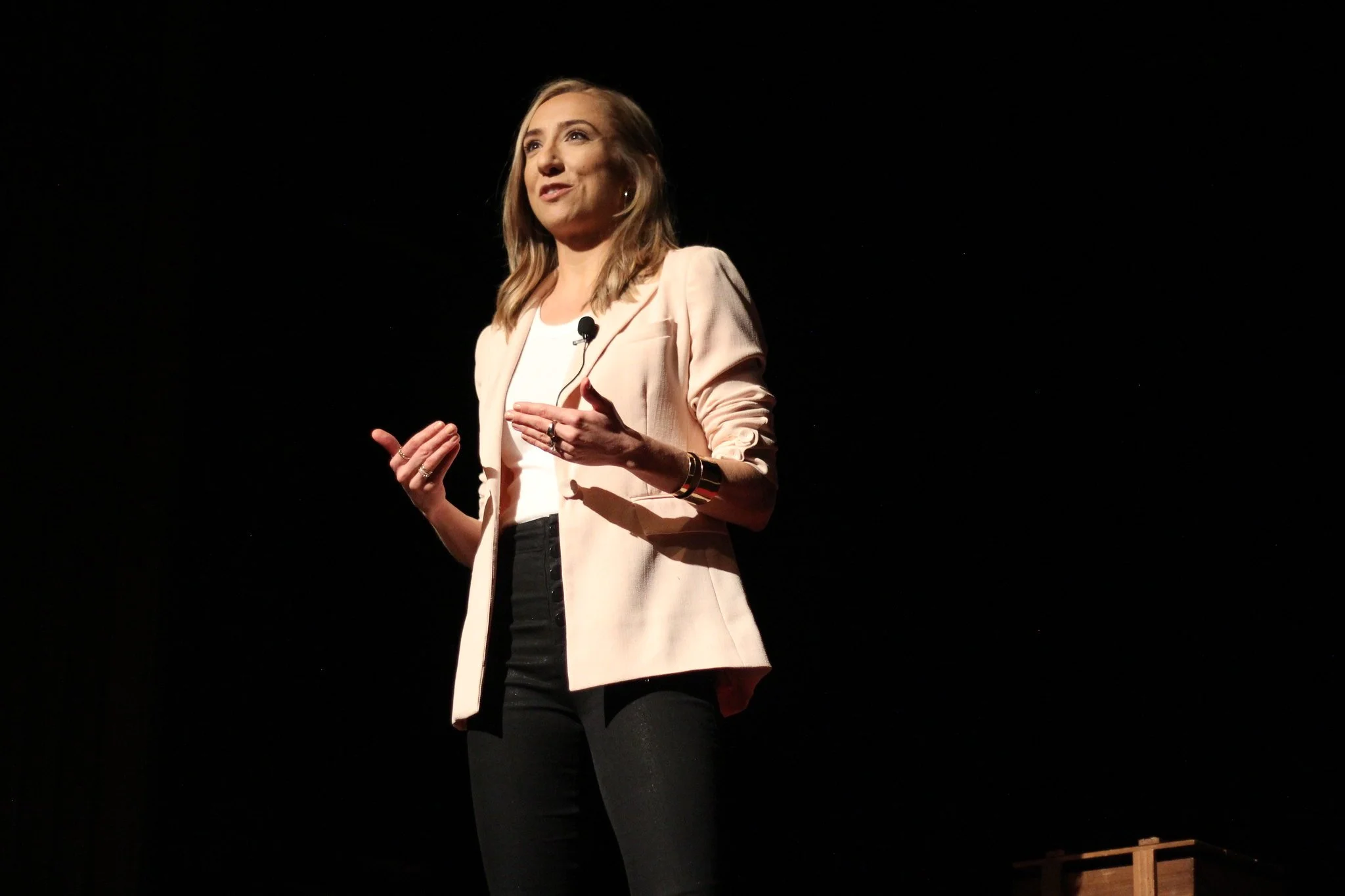
Watch: Why We Need to Grieve Our Childhood Dreams — my TEDx talk, which Zeva and I get into during the episode.
SPEAKING
Want to book liz for your podcast?
Speaking on creativity, AI, leadership, and women's original work.

MORE CONVERSATIONS
Explore more conversations on creativity
Every podcast Liz has been on, curated as one spotify playlist
MORE CONVERSATIONS